
Ramadan is not just a spiritual month; it is also one of the most significant commercial opportunities for e-commerce businesses in the UAE. Consumer spending patterns shift dramatically as people prepare for iftar gatherings, suhoor, gifting, and Eid celebrations. Brands that plan ahead with the right offers, messaging, and logistics can see a significant spike in revenue during this period, often up to 40% higher than usual.
However, winning in Ramadan is not about aggressive selling alone. It is about aligning your brand with the values of the month: generosity, family, community, and faith. When your campaigns are culturally sensitive, your content is localized, and your operations are ready for the rush, you build both short-term sales and long-term loyalty.
Table of Contents
Understanding the Ramadan E-commerce Opportunity
Market dynamics during Ramadan
In the UAE, Ramadan reshapes daily routines, which naturally impacts when and how people shop online. Many users are more active in the late evening and night, especially after iftar, when families relax and spend more time on their phones. This creates powerful windows for promotions, push notifications, and email campaigns.
At the same time, categories like food and grocery, fashion, home décor, electronics, perfumes, and gifting items see a sharp increase in demand. People prepare their homes for hosting, update wardrobes for Ramadan and Eid, and buy thoughtful gifts for friends, family, and employees. If your product range fits any of these categories, Ramadan is the time to put them front and center.
Need a Ramadan-Ready E-commerce Store?
Don’t let the 40% sales spike slip away. Our team specializes in building high-performance online stores that handle peak traffic seamlessly.
Explore Our E-commerce Website Development Services
Consumer behavior shifts
During Ramadan, purchase decisions are more emotionally driven, connected to faith, togetherness, and generosity. Shoppers are often looking for convenience (fast delivery, easy returns), value (bundles, discounts, and offers), and meaning (products that support charity or family experiences).
Impulse purchases also increase, especially when brands use urgency intelligently—limited-time offers, low-stock indicators, or last-chance Ramadan deals. At the same time, consumers pay more attention to brands that respect the month, use appropriate visuals and language, and avoid insensitive or overly pushy messaging.
Limited-Time Campaign Strategy
Campaign planning and timing
A strong Ramadan e-commerce strategy starts weeks before the month begins. You should plan your calendar with pre-Ramadan teasers, early access offers, mid-month engagement campaigns, and last-week or Eid-focused pushes. This helps you avoid last-minute panic and allows you to sync marketing, inventory, and logistics.
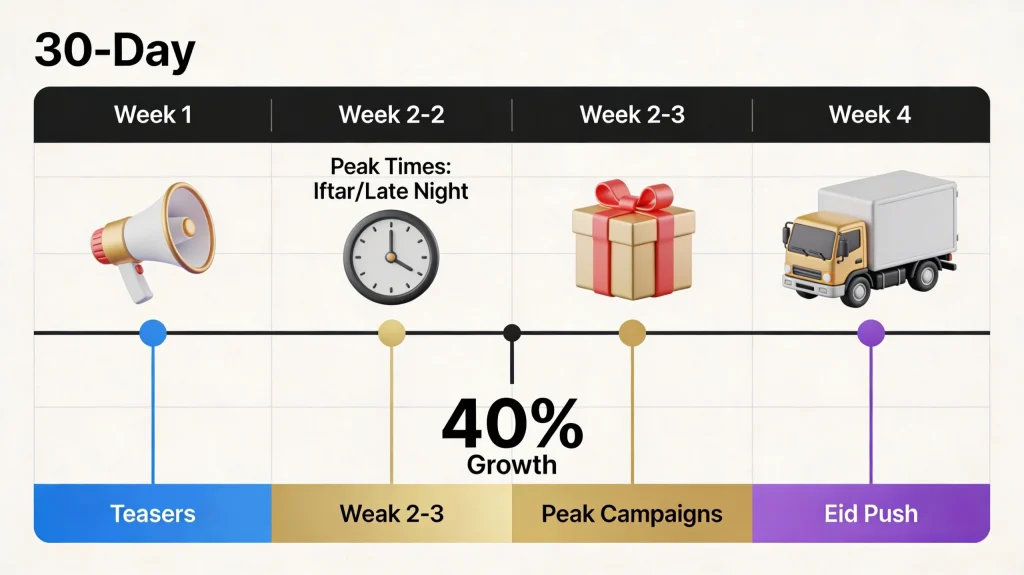
Think in phases rather than one big campaign. For example, use the first week to introduce Ramadan collections, mid-Ramadan to push bundles and high-value items, and the final days to promote Eid gifts and express delivery options. Align your key campaign moments with peak browsing times such as after iftar and late-night hours.
Flash sales and countdown promotions
Limited-time deals work extremely well during Ramadan because people are already in a mindset of planning meals, gatherings, and gifts on a daily or weekly basis. Flash sales that run for a few hours, daily “iftar deals,” or suhoor-time special offers can create a sense of excitement and urgency.
Countdown timers on your website, in your app, and in your emails reinforce this urgency. For example, “Ends in 03:15:27” on a Ramadan bundle can significantly improve conversions. Just ensure that the stock and logistics can support the promise—if you push urgency but fail to deliver, trust will suffer.
Related read:- Top 10 E-commerce Websites and Companies in UAE
Early-bird and last-minute offers
Not all shoppers behave the same way. Some like to prepare early, while others leave things until the last minute. Serve both.
- Early-bird offers: Special discounts for customers who shop in the first week of Ramadan. This helps you capture demand early and smooth warehouse load.
- Mid-Ramadan offers: Bundle deals (e.g., “Family Iftar Essentials Pack” or “Full Eid Outfit Set”) that increase average order value.
- Last-minute offers: Focus on fast delivery and ready-to-gift items in the final week, especially for Eid gifts and party essentials.
Ramadan-Themed Promotions
Cultural relevance and sensitivity
A successful Ramadan campaign must feel respectful and authentic. That means using visuals that reflect the UAE and broader Arab culture: lanterns (fanous), crescent moons, family gatherings, traditional attire, and warm, inviting colors. Avoid cliché or superficial imagery that feels generic or disconnected from local culture.
Your copywriting should acknowledge the month’s spiritual significance. Use phrases like “Ramadan Kareem” or “Ramadan Mubarak,” focus on togetherness and gratitude, and avoid language that feels too aggressive, like “Buy now or miss out forever!” A gentle, generous tone works better during this period.
Product-specific campaigns
Instead of promoting everything at once, structure your offers around specific themes and use cases. For example:
- Food and grocery: Iftar and suhoor kits, family packs, healthy options, dates, and sweets for gifting.
- Fashion: Modest wear collections, family outfit sets, Eid collections, and accessories for special gatherings.
- Home and décor: Tableware, lighting, and décor pieces that create a warm Ramadan ambience.
- Electronics: Deals on TVs, tablets, and smartphones to support family entertainment and communication.
- Beauty and wellness: Self-care sets, fragrances, and gifting hampers for Eid.
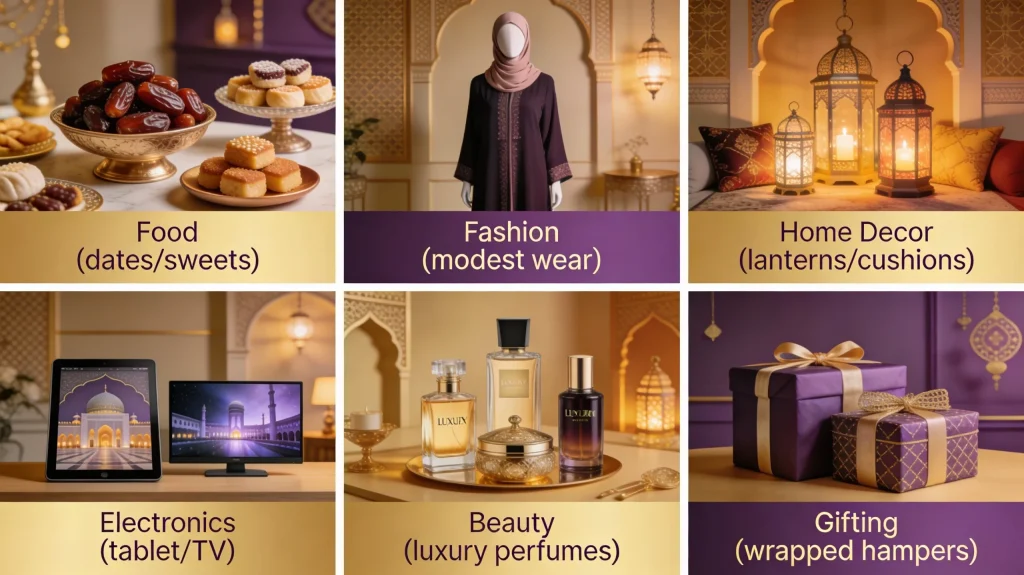
Group these into curated “Ramadan collections” on your website so customers can discover them easily. This also helps with internal linking and SEO.
Emotional storytelling and messaging
Ramadan is a perfect time to lean into storytelling instead of only price-driven ads. Short videos, reels, or blog posts that show families preparing for iftar, friends exchanging gifts, or acts of charity can create strong emotional connections.
You can also tie your brand to causes that matter: for example, donating a portion of sales to a local charity for every order during Ramadan, or organizing campaigns that encourage customers to gift essentials to those in need. When communicated sincerely, these initiatives can significantly improve brand perception and loyalty.
See How We Helped Brands Win During Ramadan
From custom campaign landing pages to bilingual content integration, we’ve delivered results for top UAE brands.
Inventory Planning and Management
Demand forecasting
Without proper inventory planning, even the best campaign can backfire. Use your historical data (if available) and industry benchmarks to forecast which categories will spike in demand. Look closely at previous Ramadan periods, Eid seasons, and similar promotional events.
Factor in lead times from suppliers, shipping delays, and warehouse capacity. For high-demand items—like dates, gift sets, modest fashion, and popular electronics—order extra stock and keep safety buffers. For low-rotation items, avoid overstocking because Ramadan demand is time-bound.
Stock optimization
Smart inventory management means putting your strongest products at the center of your strategy. Highlight bestsellers on your homepage, category pages, and ads. Use labels like “Ramadan Favorite” or “Bestseller” to guide shoppers.
Segment your products into tiers: must-have (high demand, high margin), support (cross-sell or upsell items), and seasonal (Ramadan- or Eid-specific products). Align your promotions accordingly, ensuring you do not heavily discount items with limited stock or very tight margins unless they play a strategic role.
Logistics and fulfillment preparation
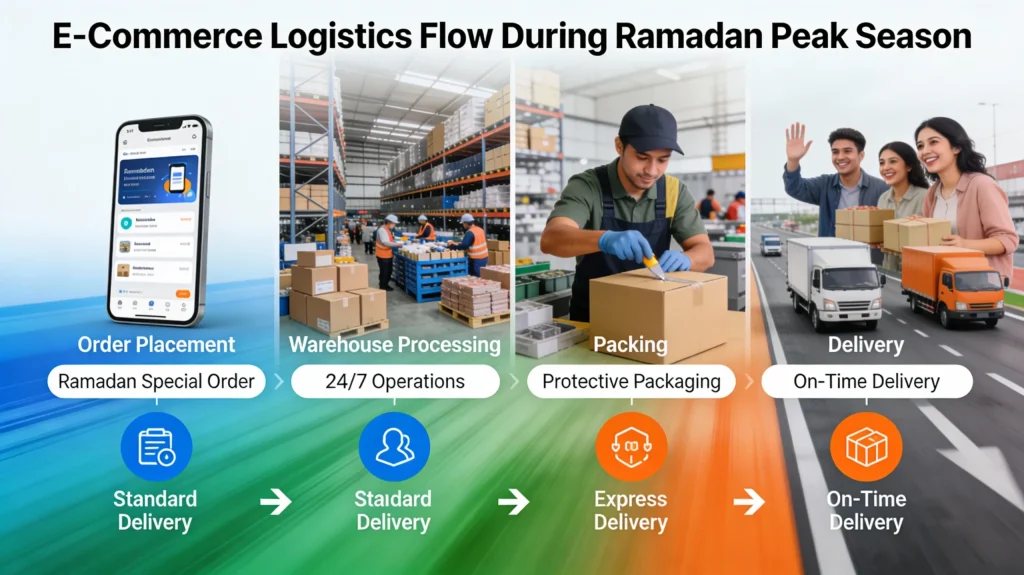
Ramadan can put immense pressure on your operations. Customers expect timely delivery, especially when purchasing items for specific iftar gatherings or Eid. This means your logistics partners, delivery fleet, and warehouse processes need to be ready.
Plan for extended working hours, additional staff during peak periods, and clear communication of delivery timelines on your website. Consider offering tiered delivery options such as standard, express, and same-day in key UAE cities like Dubai, Abu Dhabi, and Sharjah. Also, make return and exchange policies simple and clearly visible to reduce customer anxiety.
Content Localization Strategy
Language and cultural adaptation
If you are targeting the UAE market, localization is non-negotiable. Offer bilingual experiences wherever possible: Arabic and English. Your Arabic content should be naturally written, not machine-translated, and should respect local expressions and religious sensitivities.
Use localized references, such as iftar, suhoor, and Eid, instead of generic terms like “evening meal” or “holiday.” Make sure your visuals reflect local attire and settings when appropriate, and avoid content that could be misinterpreted as insensitive or out of touch with Ramadan norms.
Also read:- Types of Web Development in 2026: Essential Guide for UAE Businesses
Platform-specific content
Each platform plays a different role in your Ramadan strategy:
- Website: Highlight Ramadan collections on the homepage, add banners for key offers, and optimize product pages with seasonal keywords and benefits.
- Email: Send segmented campaigns—exclusive Ramadan offers for loyal customers, reminders for abandoned carts, and curated gift guides.
- Social media: Use reels, stories, and carousels to showcase products in real Ramadan scenarios, like table setups, outfit inspirations, or gift unboxing.
- Mobile: Ensure your site and app are fully mobile-optimized, as a large portion of Ramadan browsing and shopping happens on phones, especially in the evening.
SEO and search optimization
Ramadan and Eid keywords can drive significant organic traffic if you plan ahead. Target phrases such as “Ramadan offers UAE,” “Ramadan gift ideas,” “Eid outfits online,” or category-specific terms plus “Ramadan” or “Eid.”
Update meta titles, descriptions, and headings to reflect Ramadan collections and offers. Create dedicated landing pages for Ramadan deals and optimize them for both Arabic and English search queries. Also, pay attention to technical SEO—fast loading times and a smooth mobile experience matter more than ever when traffic spikes.
Is Your Website Ready for the Rush?
A slow site during Iftar time means lost sales. Learn more about our technical optimization services to ensure your site stays fast and secure.
Check Our Technical SEO Solutions
Peak Season Marketing Execution
Multi-channel campaign coordination
Customers will see your brand in many places during Ramadan: social media, search, email, and maybe offline too. All of these touchpoints should tell a consistent story. Use the same core message, visual identity, and tone across channels, adjusting only the format.
Create a central Ramadan campaign theme and apply it across your website banners, Facebook and Instagram creatives, Google Ads copy, and email headers. This repetition reinforces recall and makes your brand feel organized and trustworthy.
Customer engagement and retention
Ramadan is also a decisive moment for building loyalty, not just acquiring first-time buyers. Use personalization wherever possible—product recommendations based on previous orders, special offers for repeat customers, or loyalty-point boosts on key days.
Follow up with customers after purchase with helpful content: care tips, styling ideas, or suggestions for complementary products. After Ramadan and Eid, continue the relationship with “thank you” campaigns, invitations to join loyalty programs, or early access to upcoming seasonal sales.
Performance monitoring and optimization
Even with detailed planning, real performance during Ramadan can surprise you. Monitor your key metrics daily: traffic, conversion rate, average order value, best-selling products, cart abandonment rate, and delivery performance.
Use this data to adjust your campaigns in real time. If a particular product is selling out too fast, shift your ads to alternative items. If a particular audience segment responds better to bundle offers than to flat discounts, allocate more budget to that segment. Agile optimization during the month can make a big difference to total revenue.
Conclusion
Ramadan, especially in the UAE, is a decisive moment for e-commerce brands that know how to balance commercial goals with cultural and spiritual sensitivity. By carefully planning limited-time campaigns, building authentic Ramadan-themed promotions, preparing your inventory and logistics for the surge, and localizing your content for the UAE audience, you can unlock a significant sales spike.
Most importantly, when your brand genuinely supports customers in making Ramadan and Eid more meaningful—through convenience, value, and thoughtful experiences—you set the foundation for loyalty that lasts long after the holy month ends.


Vijit Tyagi is the CEO and Founder of ProntoSys, a global digital marketing and IT services agency headquartered in Dubai. A B.Tech graduate in Computer Science from Dr. A.P.J. Abdul Kalam Technical University, he brings over 15 years of industry experience. Under his leadership, ProntoSys has expanded across the UAE, UK, and India, becoming a certified Google Partner with a team of 120+ professionals. Tyagi focuses on client-centric digital solutions, ROI-driven strategies, and helping businesses adopt effective digital transformation. He also contributes thought-leadership articles on digital marketing in major publications, emphasizing innovation and growth for modern businesses.