In today’s always‑online world, your next brand crisis is only one post away.
A careless caption, a misunderstood campaign, or a frustrated customer’s viral video can turn into a full‑blown social media storm within hours — especially in hyper‑connected markets like Dubai and the wider UAE. The UAE is home to over 12.5 million social media user identities — equivalent to 110% of the total population — and 99% internet penetration. That means negative content can reach millions of eyes within minutes and rank on Google within hours.
What you do in those first few hours can either protect your reputation or permanently damage it. Many businesses in the UAE still treat social media crises as “PR problems” they’ll deal with when something goes wrong. In reality, the brands that come out stronger are those that already have a documented social media crisis management plan in place before the fire starts.
In this guide, we walk you through a simple 7‑step crisis playbook tailored specifically for Dubai and UAE businesses — from social listening and escalation workflows, to crafting the right response and rebuilding trust after the dust settles. Use it to prepare your team today so you don’t have to improvise tomorrow.
Table of Contents
Table of Contents
What Is a Social Media Crisis (And What It’s Not)?
Before building your plan, it’s important to know what you’re actually preparing for.
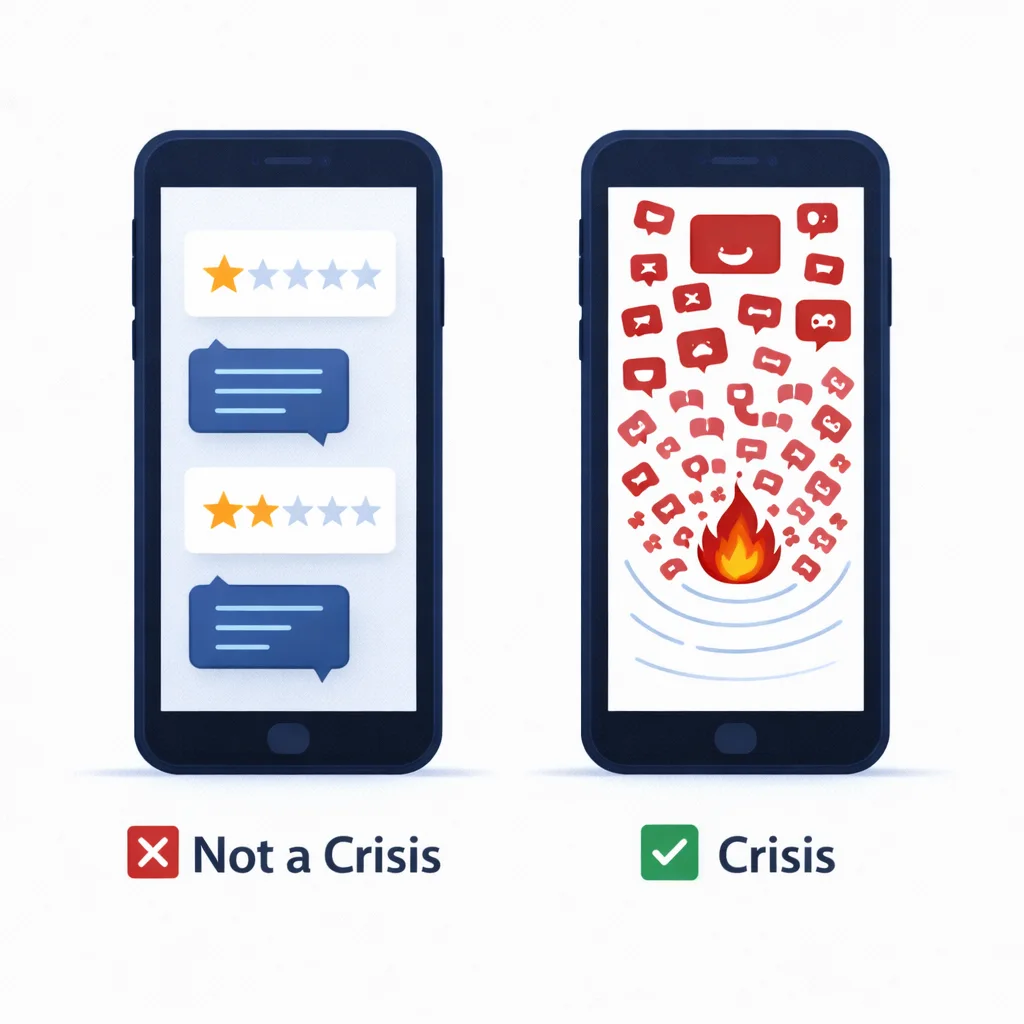
A social media crisis is not a single negative comment or a bad review. Those are routine customer service issues. A social media crisis is an event in which negative social media activity reaches a volume, velocity, or severity that threatens your brand’s reputation, customer trust, or business operations — and cannot be resolved with a standard response.

Also read:- 8 Best Social Media Marketing Trends in Dubai
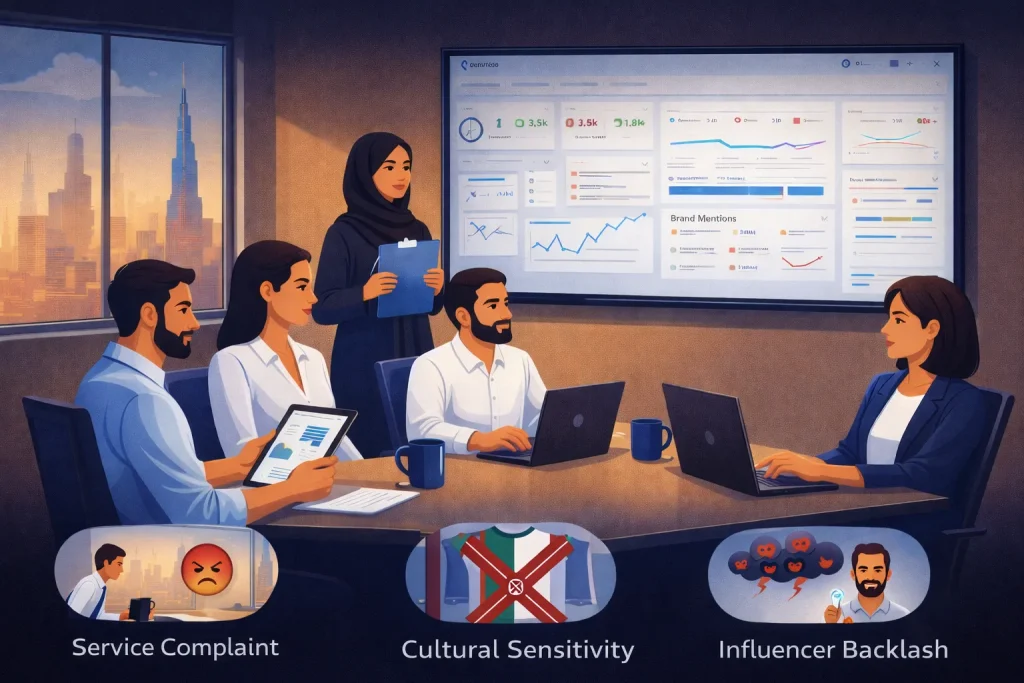
Common Types of Social Media Crises in the UAE
Understanding crisis types helps you respond with the right strategy. In the UAE context, the most common triggers include:
- Service failure going viral — A customer shares a video of poor service at a restaurant, hotel, or clinic, and it gets widely shared within hours
- Culturally insensitive content — A post or campaign that unintentionally offends cultural, religious, or national values
- Influencer backlash — An influencer partnership associated with your brand faces controversy
- Data or privacy incidents — News of a security breach or mishandling of customer data
- Employee misconduct — A staff member’s personal conduct surfaces publicly and gets linked to your brand
- Misinformation — False rumours about your product, pricing, or business practices spread rapidly
The moment you identify one of these scenarios escalating, your crisis management protocol must activate immediately.
Why Social Media Crises Escalate Faster in the UAE
The UAE’s digital environment creates a uniquely fast‑moving crisis landscape.
With WhatsApp used by 85.8% of the UAE population aged 16–64 and Instagram reaching 85.5% of adults, content spreads across both public platforms and private messaging chains at a speed that is difficult to intercept. Unlike markets where a crisis might stay confined to one platform, UAE audiences share content simultaneously on Instagram, TikTok, X (Twitter), and WhatsApp groups.
There are also unique cultural dimensions to consider:
- Posts that touch on religion, nationality, or UAE culture require bilingual (Arabic/English) responses
- Government media monitoring is active, and regulatory implications may arise
- Content is shared rapidly within expat communities and local networks simultaneously
For brands in hospitality, real estate, F&B, healthcare, and retail — all highly competitive sectors in the UAE — the reputational stakes are especially high.
Also Read:- Top AI Tools Transforming Social Media Management
Step 1: Set Up Social Listening Before a Crisis Hits
The single biggest advantage in a crisis is early detection. Brands that identify a brewing issue within the first 60 minutes can respond before it snowballs.
Tools to configure right now
- Google Alerts — Set up for your brand name, key products, and team names
- Mention.com / Brand24 — Real-time monitoring across social platforms and news
- Hootsuite or Sprout Social — Sentiment analysis and spike detection dashboards
- Meta Business Suite — Monitor comments and DMs across Facebook and Instagram
- TikTok Creator Tools / X Advanced Search — Track hashtags and mentions
What to monitor daily
- Brand name mentions (including misspellings)
- Your key product or service names
- Your CEO/founder’s name
- Competitor mentions that may involve you
- Industry‑related crisis keywords (e.g., “scam,” “fake,” “fraud” + your brand name)
Pro Tip: Set up a dedicated Slack or WhatsApp group for your social team so monitoring alerts go directly to the right people 24/7 — including weekends, since UAE social audiences are highly active on Fridays and Saturdays.
Also read:- How Social Media Is Great for Building Your Brand Identity in Dubai
Step 2: Define Your Crisis Severity Levels and Escalation Matrix
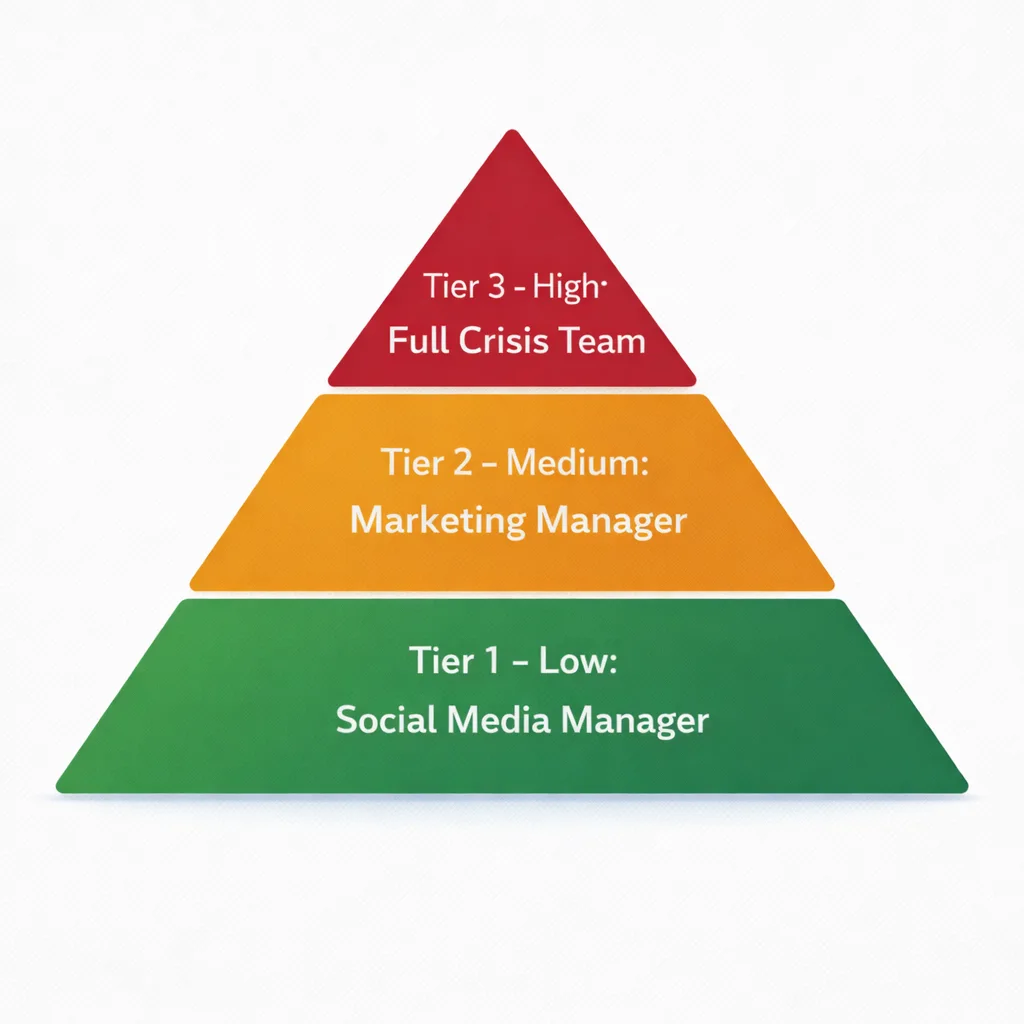
Not every issue requires the CEO to respond on Instagram Live. Having a tiered severity system prevents overreacting to minor issues and underreacting to serious ones.
The 3‑Tier Crisis Framework
| Level | Severity | Examples | Response Time | Who Handles It |
|---|---|---|---|---|
| Tier 1 | Low | 1–2 negative comments, a minor complaint | Within 2–4 hours | Social Media Manager |
| Tier 2 | Medium | Complaint going viral, rising comment volume, influencer mention | Within 1–2 hours | Social Media Manager + Marketing Manager |
| Tier 3 | High | News coverage, safety allegation, legal risk, mass negative sentiment | Within 30 minutes | Full crisis team: CEO/MD, PR, Legal, Social |
The Escalation Matrix Questions to Ask
- Has this been shared 50+ times in under 1 hour?
- Is the media (online news portals, TV channels) picking it up?
- Does it involve regulatory, legal, or health and safety concerns?
- Has a verified influencer (10K+ followers) shared it?
If the answer is yes to any of these, move immediately to the next severity tier.
Step 3: Assemble Your Social Media Crisis Response Team
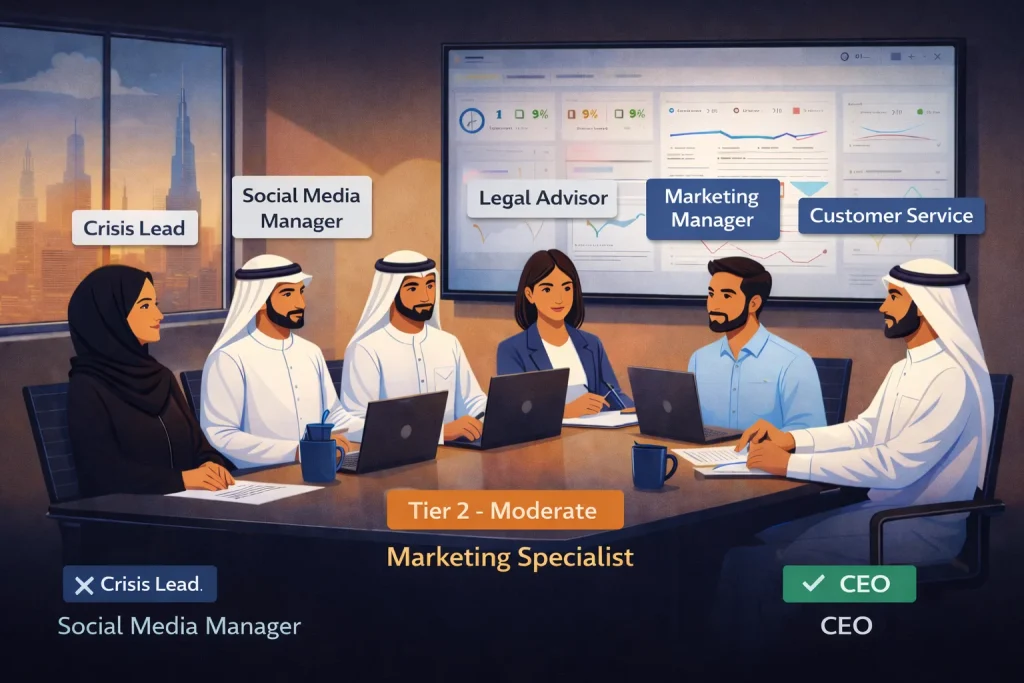
A crisis response team should be pre‑assigned, not figured out in the middle of an emergency. Every team member needs to know their role before an incident happens.
Key Roles in a UAE Brand Crisis Team
- Crisis Lead / Spokesperson — The single voice of the brand externally; approves all public statements
- Social Media Manager — Monitors, pauses scheduled posts, manages responses, and tracks sentiment in real time
- Marketing Manager — Oversees messaging alignment with brand strategy and campaigns
- Legal Advisor — Reviews statements for liability, compliance with UAE media and cybercrime laws
- Customer Service Lead — Manages DMs, complaints, and direct customer communications
- Senior Management / CEO — Available for Tier 3 decisions and, when necessary, public video statements
Important for UAE Brands: Always designate a bilingual team member for Arabic/English communications. A response that only goes out in English in a primarily Arabic‑speaking crisis context will be perceived as dismissive.
What to Prepare Before a Crisis
- A list of pre‑approved emergency contacts (legal counsel, PR agency, senior management)
- Internal communication channel (dedicated WhatsApp group or Slack channel)
- Pre‑approved message templates for the most likely scenarios
- A social media login credentials document (securely stored), accessible to the right team members
Step 4: Stop Scheduled Posts and Contain the Situation
The moment a Tier 2 or Tier 3 crisis is identified, the very first action is simple: stop everything scheduled.
Publishing a light‑hearted promotional post or a Ramadan greeting while your brand is embroiled in a controversy is one of the most damaging moves a brand can make. It signals total disconnection from reality and accelerates the backlash.
Immediate containment checklist:
- ✅ Pause all scheduled social media posts on every platform
- ✅ Pause any running paid ad campaigns linked to the affected topic
- ✅ Temporarily pin a neutral or holding statement to your profile
- ✅ Review and, if necessary, temporarily archive the original post that triggered the issue
- ✅ Alert your team and activate the crisis response group
- ✅ Screenshot and document all incoming comments and mentions for your records
Do not delete comments unless they contain explicit hate speech or violate platform community guidelines. Publicly deleting legitimate criticism escalates the situation and erodes trust.
Also Read:- Top 10 Social Media Marketing Hacks for Explosive Growth
Step 5: Respond Quickly with Empathy, Clarity, and Facts
Speed is not optional. Research shows that 35% of consumers expect a brand response on social media within one hour during a crisis. Silence is not neutrality — it creates an information vacuum that rumours and speculation quickly fill.
But speed alone is not enough. The quality of your response matters enormously.
The anatomy of a strong crisis response
Every effective crisis response — whether it’s a tweet, a comment reply, or a full Instagram caption — should include these core elements:
- Acknowledgement — You are aware of the situation
- Empathy — You understand and care about the impact on those affected
- Action — You are actively investigating or addressing the issue
- Commitment to update — You will share further information by a specific time
- Contact point — A single channel for enquiries (email, DM, or phone number)
Holding Statement Templates for UAE Brands
Use these as a starting point and adapt to your brand voice:
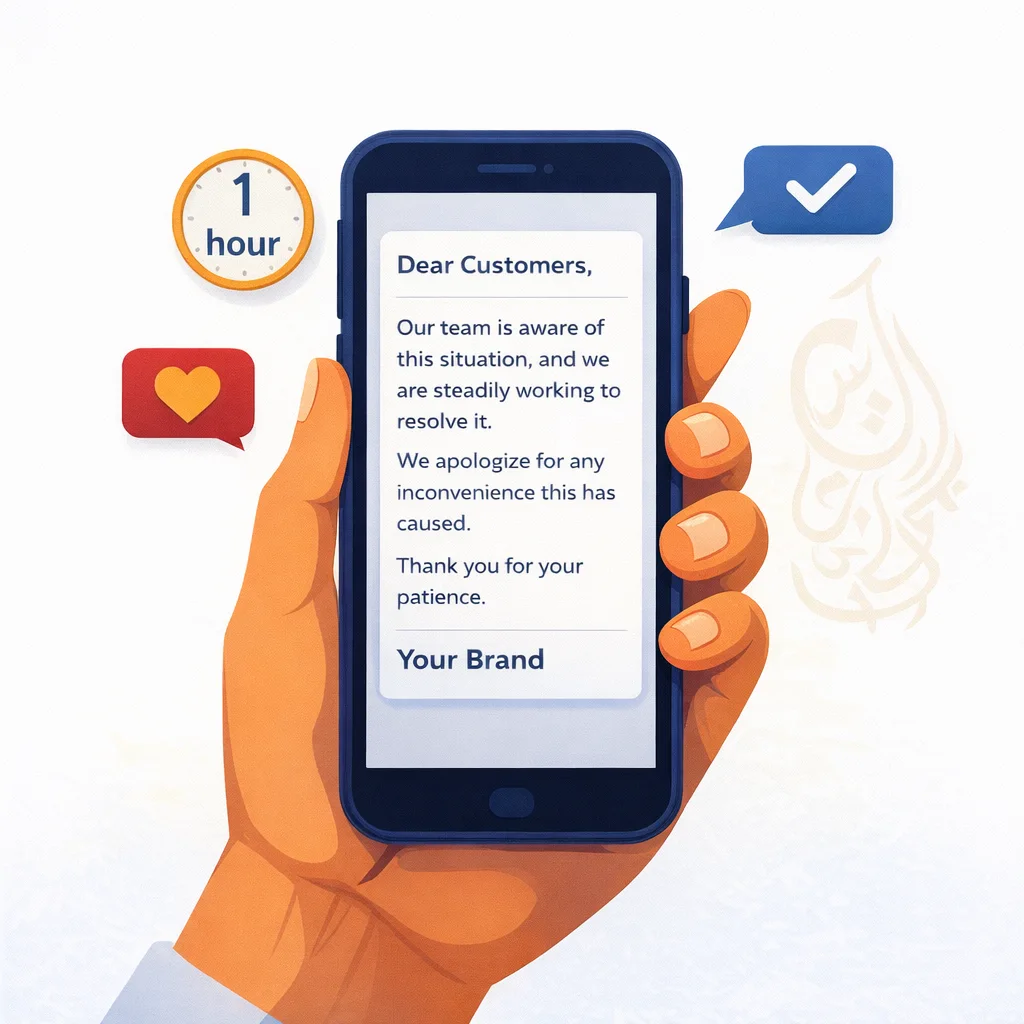
For a service complaint going viral:
“We’re aware of the feedback shared about [service/location]. We take every customer experience seriously and our team is currently looking into this. We will share an update within [X hours]. In the meantime, please DM us or reach us at [email/phone] so we can assist you directly.”
For a cultural or content sensitivity issue:
“We sincerely apologise for the recent post/campaign that has caused offence. This was not in line with our values, and we have removed the content immediately. We are conducting an internal review and remain committed to being respectful and thoughtful in all our communications.”
For a data or privacy concern:
“We have become aware of a concern regarding [brief description]. The security and privacy of our customers is our top priority. Our team is urgently investigating and will provide a full update within [timeframe]. We apologise for any concern this has caused.”
UAE‑specific tip: For high‑severity crises, issue your holding statement in both English and Arabic. This demonstrates respect for your entire audience and prevents the perception of selective communication.
Step 6: Monitor Sentiment, Engage in Real Time, and Know When to Escalate
Once your first response is out, the work is far from over. This phase is about active management — tracking how the public is reacting, responding to individuals, and deciding when to escalate your communications.
Real‑time actions during the crisis
- Monitor your chosen listening tool every 15–30 minutes for sentiment shifts
- Respond to individual comments that are genuine and specific (avoid copy‑pasting the same reply to every comment — audiences notice)
- Avoid getting into arguments. Acknowledge, empathise, and redirect to a private channel for resolution
- Keep your crisis team updated every hour with a brief summary of the sentiment trend and total volume
When to escalate your response
Some crises require more than a comment reply. Consider escalating to a more formal response if:
- The story is being picked up by UAE news portals or Gulf‑wide media outlets
- A UAE government entity has commented, shared, or flagged the issue
- Total negative mentions exceed several hundred within 24 hours
- A senior public figure, verified influencer, or journalist has weighed in publicly
In these scenarios, consider a formal video statement from the CEO or spokesperson, a press release, and a dedicated landing page or FAQ on your website addressing the issue transparently.
Step 7: Post‑Crisis Review — Learn, Document, and Strengthen Your Brand
The final step is the one most businesses skip — and it’s the one that prevents the next crisis. Once the immediate situation is resolved, conduct a structured post‑crisis review within 1–2 weeks.
What your post‑crisis review should cover
- Timeline reconstruction — When was the issue first detected? When was the first response issued? What was the gap?
- Team response assessment — Did everyone know their role? Were approvals slow?
- Communication audit — Were responses empathetic, clear, and consistent across platforms?
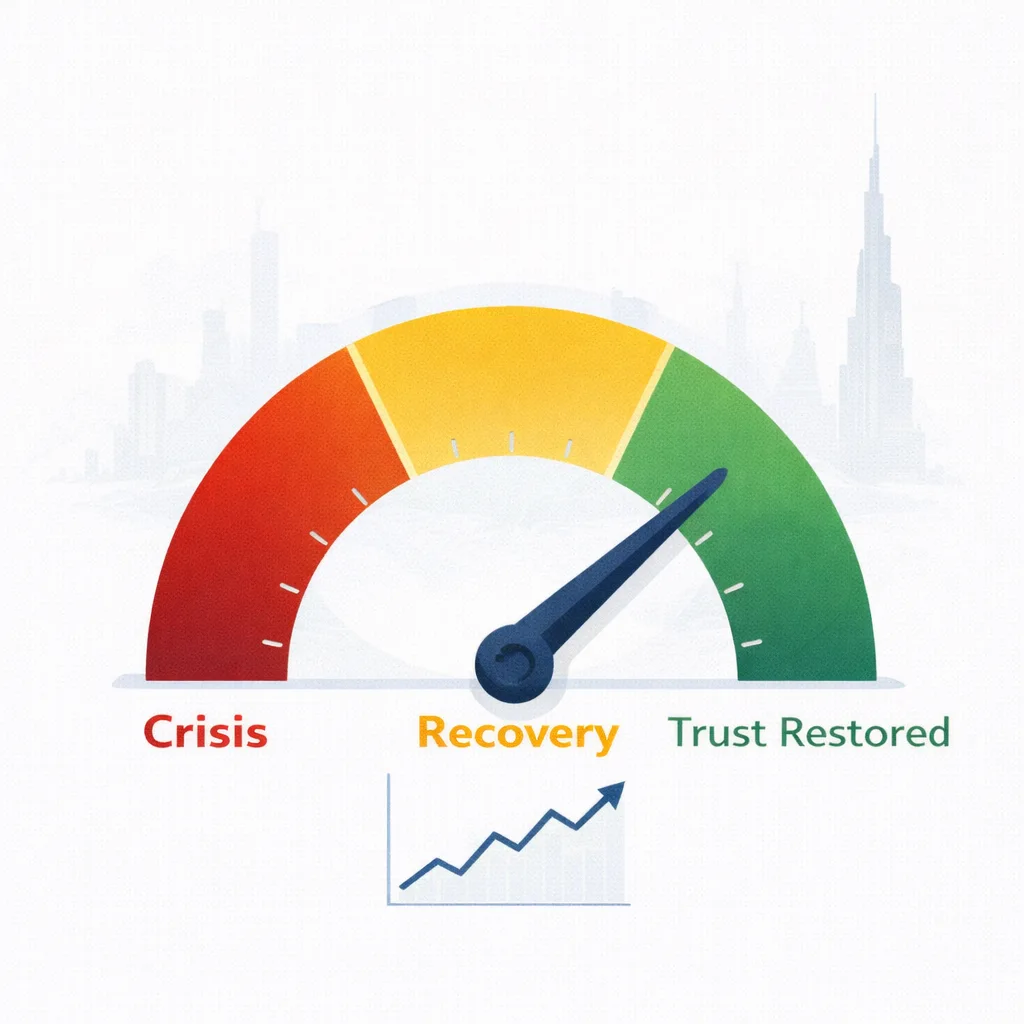
- Sentiment recovery tracking — How long did it take for public sentiment to return to neutral or positive?
- Root cause analysis — What was the actual origin of the crisis? Was it preventable?
Actions to take after the review
- Update your social media crisis management plan with any gaps identified
- Conduct a team training session on cultural sensitivity and brand tone guidelines
- Implement a content review checklist (especially for sensitive topics like religion, nationality, health claims, and pricing)
- Share the review findings internally so all departments — not just social media — are aligned
Turning a crisis into a trust‑building moment
Handled well, a crisis can actually increase long‑term trust. Consumers don’t expect brands to be perfect — but they do expect honesty, accountability, and action. Brands that respond with empathy and speed consistently recover faster, and in some cases, emerge with a stronger reputation than they had before.
After the crisis resolves, proactively share what you’ve changed or improved. Behind‑the‑scenes content, team updates, and positive customer stories all help shift the narrative and remind your audience what your brand genuinely stands for.
Related read:- How to Grow Your Social Media Engagement Using the 5‑5‑5 Rule
Real‑World Style Scenarios for Dubai & UAE Brands
Here are three illustrative scenarios to help your team visualise how a crisis can unfold — and how to respond.
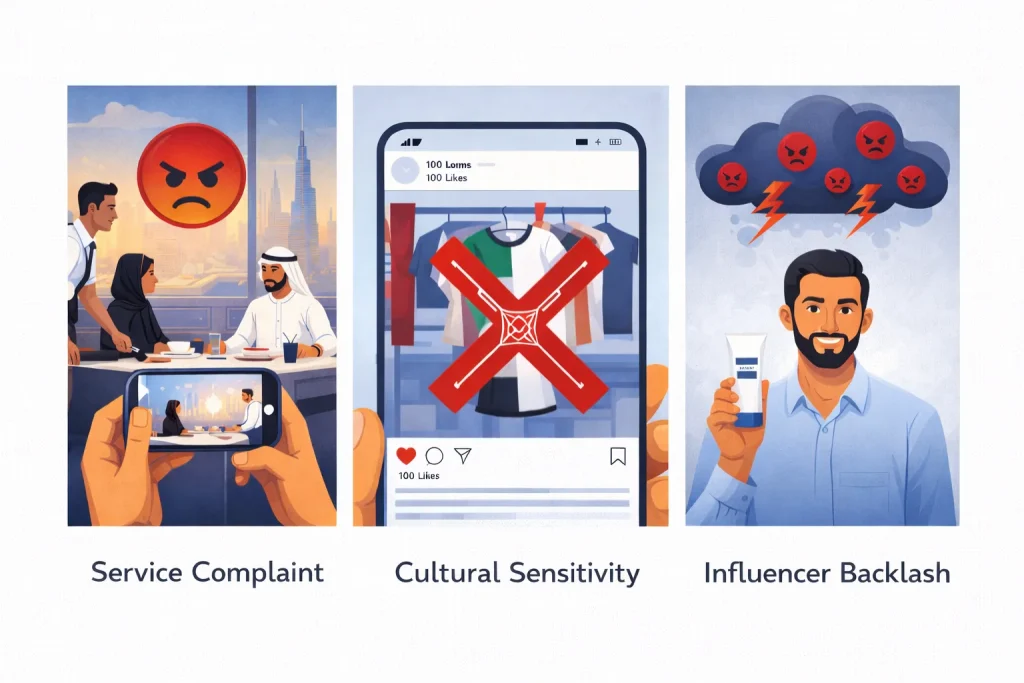
Scenario 1: Viral Service Complaint (F&B / Hospitality)
A customer films a poor experience at your Dubai restaurant or hotel — dirty premises, rude staff, or wrong order — and posts it on Instagram Reels. It gains 10,000 views overnight.
Do: Respond in the comments publicly within 1–2 hours, acknowledging the experience and inviting the customer to DM you. Issue a brief holding statement on your stories. Internally investigate and follow up with the customer directly.
Don’t: Delete the video, dismiss the claim as fake, or respond defensively in public comments.
Related read:- Why Social Media Marketing Is Essential for Travel Businesses
Scenario 2: Culturally Insensitive Campaign (Retail / Fashion)
Your brand publishes a campaign during a sensitive period (Ramadan, UAE National Day) that unintentionally uses imagery or messaging that conflicts with local cultural values. It gets picked up rapidly in Arabic social media circles.
Do: Remove the content immediately. Issue a bilingual apology within the hour. Consult a cultural advisor before publishing your follow‑up message. Commit to a cultural review of all future content.
Don’t: Wait until Monday morning. Don’t respond only in English. Don’t justify the original creative.
Also Read:- Google Ads During Ramadan: Special Strategies for UAE Audiences
Scenario 3: Influencer Backlash (Any Sector)
An influencer your brand partnered with becomes embroiled in their own personal controversy. Their audience begins tagging your brand in negative comments, associating you with the issue.
Do: Quietly pause any active campaign content featuring the influencer. Issue a neutral statement clarifying your brand values if the association is strong. Do not publicly attack the influencer.
Don’t: Continue running paid ads featuring the influencer during their controversy.
Also Read:- Step‑by‑Step Guide: Creating a Social Media Marketing Roadmap
How a Social Media Agency in Dubai Can Help You Manage and Prevent Crises
Building and executing a social media crisis management plan requires expertise, the right tools, and the bandwidth to respond 24/7 — which is a significant challenge for in‑house teams, especially in growing UAE businesses.
A professional Social Media Agency in Dubai, like ProntoSys, can support you with:
- Proactive social listening setup — configuring monitoring tools to detect brand mentions, sentiment shifts, and early warning signals before they become crises
- Crisis response planning — building a customised escalation matrix, response templates, and team protocols specific to your brand, sector, and target audience in the UAE
- Real‑time community management — monitoring and managing your social media channels daily, including evenings, weekends, and public holidays, so no crisis goes undetected
- Content review and compliance — reviewing all content for cultural sensitivity, tone alignment, and platform guidelines before publishing
- Post‑crisis reputation recovery — developing a content strategy to rebuild positive sentiment, re‑engage your audience, and restore brand trust after an incident
With over a decade of experience serving businesses across Dubai, Abu Dhabi, Sharjah, and the wider UAE, ProntoSys combines deep local market knowledge with strategic social media expertise to help your brand stay protected, prepared, and positioned for long‑term growth.
Final Thought
A social media crisis will rarely announce itself. But with the right preparation — a listening setup, a clear escalation plan, a trained team, and practiced response templates — you can turn even a difficult moment into evidence of your brand’s integrity and customer commitment.
The question is not if your brand will face social media pressure in the UAE’s competitive digital landscape. The question is: will you be ready?

Gargi Tyagi is the Chief Operating Officer (COO) of Prontosys, a global digital marketing and IT services firm. She plays a key role in overseeing operations, ensuring smooth delivery of client projects, and driving growth across the company’s global footprint. Gargi works alongside the leadership team at Prontosys, contributing to the company’s mission to deliver ROI-focused, customized digital solutions across diverse industries.