

In the United Arab Emirates, where mobile internet speeds clock in at an astonishing 546.14 Mbps—the fastest in the world as of 2025—digital experiences have reached new heights of expectation. Yet, with 58.51% of all internet traffic originating from mobile devices, businesses face a stark reality: a landing page that loads just three seconds too slowly on a smartphone can cost you 53% of potential customers who abandon ship in frustration. Imagine a Dubai shopper, browsing Google Ads on their commute, clicking your ad only to encounter a sluggish page—poof, they’re gone to a competitor’s seamless site. This isn’t hyperbole; it’s the UAE’s hyper-connected market, boasting 99% internet penetration among its 11.1 million users and 100% mobile broadband connectivity, where every millisecond matters for conversion success. Mobile-first PPC isn’t a luxury—it’s essential, transforming ad clicks into revenue by aligning with how UAE consumers live: always on, always mobile. In this guide, discover the profound business impact of mobile optimization, master responsive ad best practices, meet landing page speed requirements, and explore real UAE campaign examples that delivered measurable wins.
Table of Contents
The UAE Mobile Landscape: By the Numbers
The UAE’s digital ecosystem is a powerhouse, driven by unparalleled mobile adoption that demands PPC strategies built for speed and seamlessness. Consider these eye-opening statistics that underscore the urgency for mobile-first approaches:
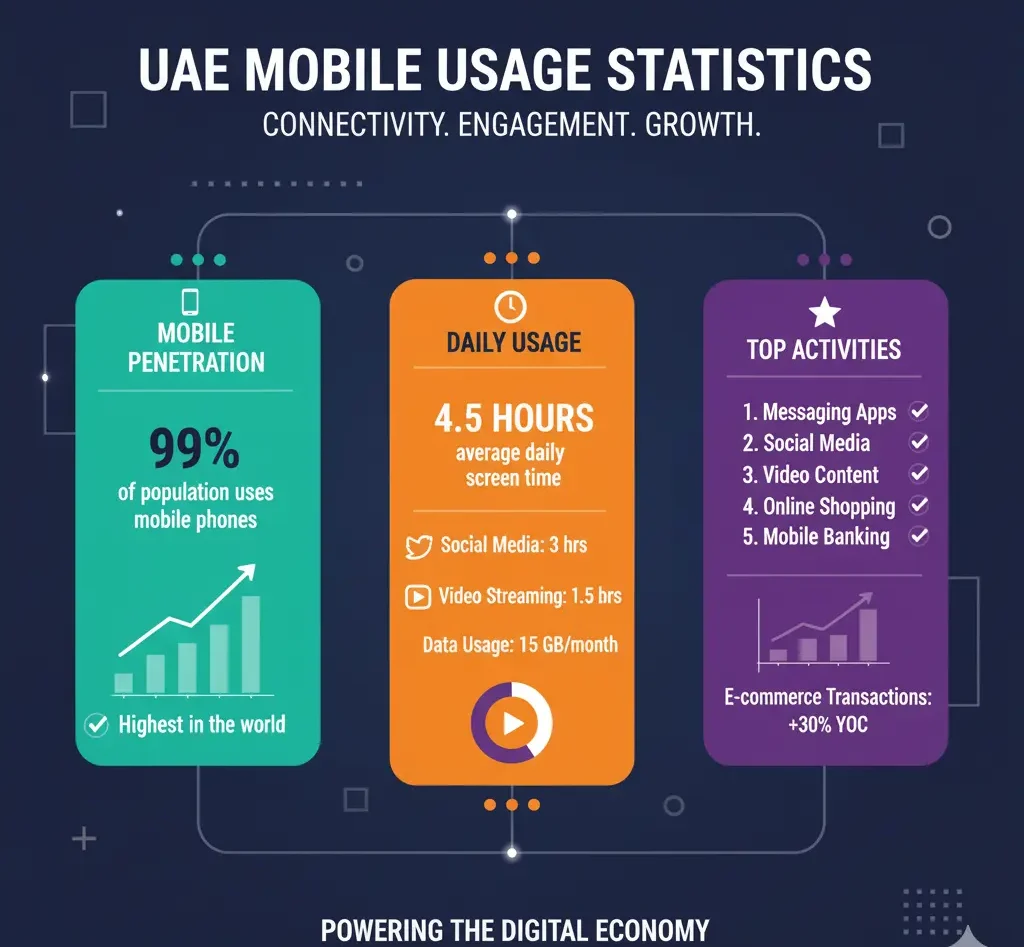
- 99% internet penetration with 11.1 million users accessing the web: Nearly every resident is online, creating a vast audience for PPC campaigns, but they access it predominantly through mobile devices.
- 58.51% of device usage comes from mobile phones, surpassing desktop (39.51%) and tablets (1.95%): Mobile dominates daily interactions, from shopping to research, making it the primary channel for ad engagement.
- 546.14 Mbps average mobile internet speed—the fastest in the world, creating high user expectations for instant loading: This blistering pace, fueled by advanced 5G infrastructure, means UAE users won’t tolerate delays, amplifying the need for optimized ad experiences.
- 195% mobile connection penetration (21.9 million connections for 11.2 million population), indicating multiple devices per person: With more connections than people, users juggle smartphones, tablets, and wearables, expecting consistent performance across all.
- Users spend 8 hours 36 minutes daily online, with significant portions on mobile devices: This extended screen time, much of it mobile-driven, translates to prime opportunities for PPC—but only if ads lead to frictionless experiences.
These figures paint a clear picture for PPC advertisers: UAE consumers, empowered by world-leading connectivity, demand seamless, lightning-fast mobile experiences that match their high-tech lifestyle. Any friction in the ad-to-landing-page transition—be it slow loads or non-responsive designs—results in immediate abandonment, wasted ad spend, and lost revenue in a market where competitors are just a swipe away.

Why Mobile Optimization Directly Impacts Conversion Rates
Mobile optimization isn’t just a technical checkbox—it’s the foundation of PPC profitability in the UAE market. When 96% of global internet users access the web through mobile devices and mobile phones account for nearly 60% of all web traffic, every element of your PPC strategy must be optimized for smaller screens, faster interactions, and on-the-go behavior. Here’s why mobile-first thinking translates directly to conversion rate improvements and lower customer acquisition costs.
Google’s Mobile-First Indexing and Quality Score
Since Google transitioned to mobile-first indexing, the search giant now uses the mobile version of a site’s content, crawled with the smartphone agent, for indexing and ranking purposes. This fundamental shift has profound implications for PPC advertisers: your Quality Score—the metric that determines ad position and cost-per-click—is now heavily influenced by mobile page performance.
Non-responsive ads and slow-loading landing pages receive lower Quality Scores because they fail to meet Google’s user experience standards. When your Quality Score drops, two costly problems emerge: higher CPCs (you pay more for each click) and reduced ad visibility (your ads appear in lower positions or less frequently). Google recommends responsive web design because it’s the easiest pattern to implement and maintain, serving the same HTML code on the same URL regardless of device while adapting display based on screen size.
Mobile-first indexing also means Google evaluates whether your mobile and desktop sites contain the same content, structured data, metadata, and visual elements. Missing images, blocked resources, or stripped-down mobile content can cause your pages to disappear from the index entirely after mobile-first indexing is enabled. For PPC campaigns, this creates a direct connection: optimized mobile experiences earn better Quality Scores, which lower your ad costs and improve ad placement—maximizing ROI on every dirham spent.
Also read:- Why You Should Hire a PPC Agency in Dubai Instead of Doing It Yourself?
The 3-Second Rule in the UAE Market
The UAE’s ultra-fast mobile internet speed of 546.14 Mbps—the fastest globally—has conditioned users to expect instant page loads. When connectivity is this fast, users attribute slow experiences to poor website optimization rather than network limitations, making them less tolerant of delays. This creates what’s known as the “3-second rule,” where page load time becomes the critical factor separating conversions from bounces:
- Pages loading in 1-3 seconds maintain engagement: Users remain on site, explore content, and complete desired actions. In fact, studies show that for every 1-second improvement in load time, conversions can increase by 7%.
- 3-5 second load times increase bounce rates by 40-60%: User frustration mounts as they wait, and many begin searching for faster alternatives. Research indicates that a 3-second delay results in a 20% reduction in conversions.
- Beyond 5 seconds, 90% of mobile users abandon: At this threshold, 53% of mobile site visitors will abandon the page entirely, representing massive wasted ad spend as clicks fail to convert.
These statistics take on heightened significance in the UAE, where the average user spends 8 hours and 36 minutes online daily, constantly switching between apps, sites, and content. When alternatives are just a tap away and users expect the instant gratification enabled by 5G networks, every second of delay compounds abandonment risk. Real-world examples demonstrate this impact: Vodafone achieved an 8% increase in sales through page speed optimization, while Yelp saw a 15% boost in conversion rates after improving load times. For UAE PPC campaigns targeting high-value conversions—luxury retail, real estate inquiries, B2B lead generation—the difference between a 2-second and 5-second landing page can mean thousands of dirhams in lost revenue per day.
Mobile User Behavior Patterns
Mobile users interact with content fundamentally differently from desktop users, and understanding these behavioral patterns is essential for conversion optimization. On smartphones, users exhibit shorter attention spans, driven by the context of mobile use: commuting, standing in queues, and multitasking between apps. They rely on thumb-based navigation, with the majority of interactions happening in the lower third of the screen where thumbs naturally rest, making button placement and tap target size critical design considerations.
Vertical scrolling is the preferred interaction method, as users expect single-column layouts that eliminate horizontal scrolling and minimize cognitive load. Mobile users also expect immediate action—they want to call, purchase, book, or submit with minimal friction. In the UAE’s fast-paced environment, where 70.1% of the total population now uses mobile phones and 93.8% of internet users access social media monthly (primarily via mobile), these behavioral patterns are amplified.
Consider how this affects PPC landing pages: a desktop form requiring 12 fields translates to tedious thumb-typing on mobile, dramatically increasing abandonment. A desktop navigation menu with hover-dependent dropdowns becomes unusable on touchscreens. Images optimized for large monitors may require excessive zooming on 6-inch screens. Google specifically warns against lazy-loading primary content upon user interaction (swiping, clicking, typing), as the search engine won’t load or index content that requires such actions.
For UAE PPC advertisers, friction-free experiences are non-negotiable because users have immediate alternatives. When 87% of mobile phones in use globally are smartphones capable of instant competitor comparisons, app switching, and alternative searches, any usability friction becomes a conversion killer. Mobile optimization must account for thumb-friendly button sizes (minimum 48×48 pixels), clear CTAs visible above the fold, streamlined forms (3-5 fields maximum), readable typography (16px minimum font size), and vertical layouts that respect how users naturally hold and interact with devices. Success in the UAE’s mobile-dominant market requires designing specifically for these behavior patterns, not adapting desktop experiences as an afterthought.
Responsive Ad Best Practices for UAE Campaigns
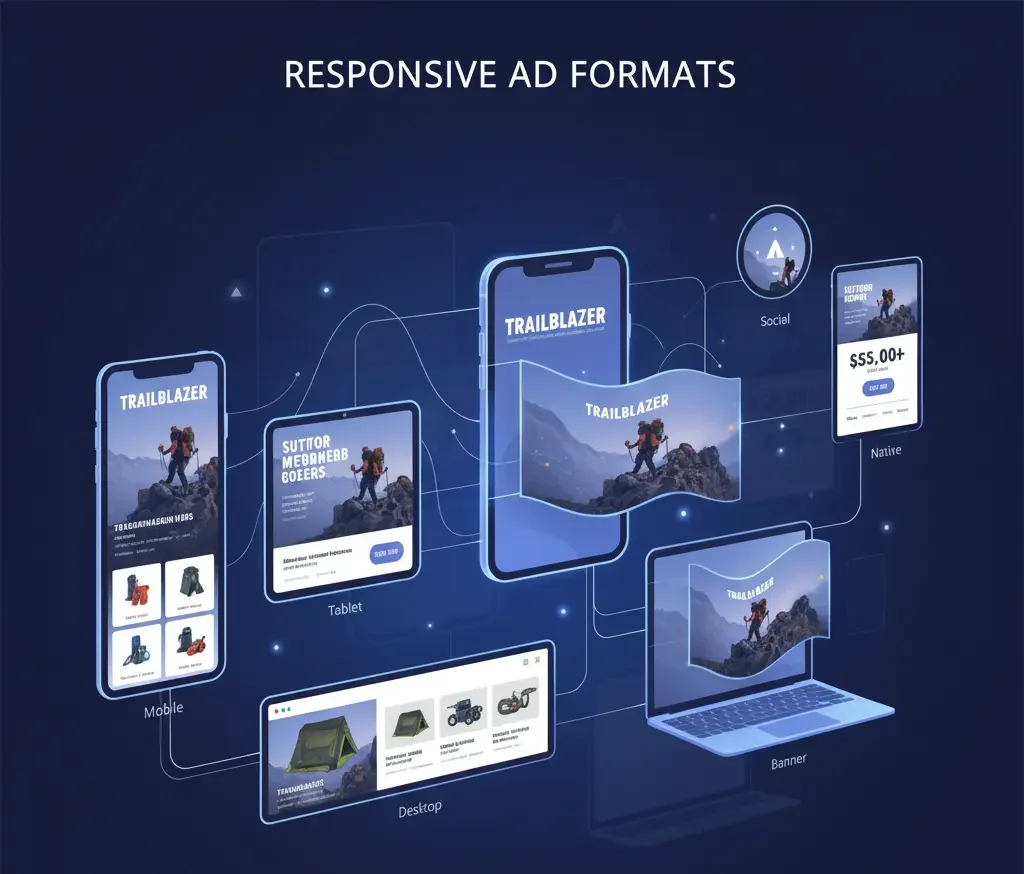
For PPC agencies operating in the UAE, mastering responsive ad formats is essential for maximizing campaign reach and conversion rates across a mobile-dominant market. Here are the best practices for each major Google Ads format, tailored to the UAE context.
Related read:- 14 Best Digital Marketing Agencies in Dubai [2025]
Responsive Search Ads (RSAs)
Responsive Search Ads (RSAs) automatically mix and match headlines, descriptions, and display URLs to best fit different screen sizes and device types, making them ideal for reaching UAE audiences across smartphones, tablets, and desktops. The RSA format lets advertisers provide up to 15 headlines and 4 descriptions, and Google’s AI selects the best combination for each user and search query.
Guidance for UAE campaigns:
- Write 8-15 headline variations optimized for mobile character limits: Craft headlines that are concise, keyword-rich, and clearly communicate value propositions. Use active verbs and emotional triggers to boost click-through rates. For example: “Fast Dubai Delivery,” “Luxury Homes in Abu Dhabi,” or “24/7 Customer Support.”
- Create compelling 90-character descriptions that work on small screens: Focus on benefits, urgency, and specific offers that prompt immediate action. Examples: “Exclusive Deals This Week,” “Book Your Appointment Now,” “Limited Time Offer.”
- Test Arabic and English combinations for the UAE’s bilingual market: Use RSAs to deliver ads in both Arabic and English, or even Arabic-English hybrid versions. This ensures your campaigns resonate with both local and expatriate audiences, maximizing conversion potential in the diverse UAE market.
Responsive Display Ads
Responsive Display Ads resize, reformat, and optimize automatically across the Google Display Network, appearing on various devices and placements. This flexibility is key for reaching UAE users on mobile, where screen real estate is limited and attention spans are short.
Best practices for UAE campaigns:
- Use high-quality square and horizontal image assets: Ensure your ads contain clear, sharp images in both square (1:1) and horizontal (1.91:1) ratios. This guarantees your creative appears professionally on any device.
- Ensure clear, large logo visibility on small screens: Position your logo at the center or top-left of the image, avoiding small or obstructed branding. Test on mobile to guarantee logo readability at reduced sizes.
- Minimize text overlays, keeping them readable on mobile: Avoid cramming ads with text. If overlaying words, use short, high-contrast phrases in large fonts. For instance, “50% Off Today” or “Fast Delivery” can be placed prominently and legibly.
Video Ads for Mobile Consumption
With YouTube and TikTok reigning as dominant mobile platforms in the UAE, optimizing video ads for mobile viewing is critical. These formats are increasingly popular among local users, especially for engaging with short-form content.
Best practices for UAE mobile video ads:
- Use vertical (9:16) and square (1:1) formats for mobile viewing: Vertical and square videos are optimized for mobile-first experiences, filling the screen and maximizing engagement rates. Avoid horizontal formats that leave large blank spaces on mobile devices.
- Front-load key messages in the first 3 seconds: Place your most compelling offer, brand name, or call-to-action at the beginning of the video. This captures attention quickly and keeps viewers engaged, reducing the risk of skips.
- Optimize clear CTAs for thumb tapping: Use large, easy-to-tap CTA buttons and straightforward language. For example, “Tap Now,” “Learn More,” or “Get a Quote” should be prominently displayed and sized for mobile thumb interaction.
By following these best practices for responsive ads, PPC agencies in the UAE can ensure their campaigns deliver maximum visibility, engagement, and conversion rates across the region’s mobile-first landscape.
Landing Page Speed Optimization Techniques
Optimizing landing page speed is critical for PPC success in the UAE, where users expect instant access and high performance. Here’s a structured approach to technical and design optimization, along with benchmarks and tools.
Technical Performance Optimization
- Image compression: Use modern formats like WebP for images, which offer superior compression without sacrificing quality. Implement lazy loading so images below the fold load only when needed, reducing initial page load time. Resize images to match their display size and use tools like TinyPNG or ImageOptim for further compression.
- Minify CSS, JavaScript, and HTML: Reduce file sizes by removing unnecessary code, whitespace, and comments. Combine and minify CSS and JavaScript files to minimize HTTP requests and eliminate render-blocking resources. Audit and remove unused plugins or scripts that add bloat.
- Content Delivery Networks (CDNs): Leverage CDNs such as Cloudflare, BunnyCDN, or StackPath with UAE-based or Middle East nodes. CDNs cache your site on multiple global servers, ensuring visitors in Dubai, Abu Dhabi, and Sharjah get the fastest version possible.
- Browser caching: Enable browser and server-side caching to serve preloaded versions of your site for repeat visitors, reducing load times and server requests.
- AMP (Accelerated Mobile Pages): Consider implementing AMP for landing pages that require near-instant loading, especially for mobile users. AMP strips down HTML and JavaScript to deliver lightning-fast experiences.
Mobile-Specific Design Elements
- Thumb-friendly buttons: Ensure all interactive elements, especially CTAs, are at least 48×48 pixels for easy tapping on mobile devices.
- Streamlined forms: Limit form fields to 3-5 essentials and enable autofill to minimize typing and friction for mobile users.
- Clear CTAs above the fold: Place the primary conversion action (e.g., “Book Now,” “Get a Quote”) prominently at the top of the page, visible without scrolling.
- Readable typography: Use a minimum font size of 16px and high contrast for legibility on small screens.
- Vertical layouts: Design single-column layouts that eliminate horizontal scrolling, making navigation intuitive and content easy to follow on mobile devices.
Core Web Vitals Benchmarks
Google’s Core Web Vitals are key metrics for measuring user experience and SEO performance:
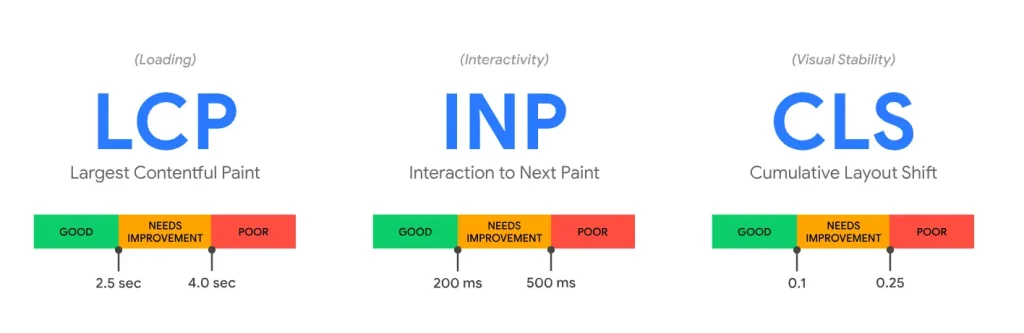
- Largest Contentful Paint (LCP): Under 2.5 seconds for the main content to load.
- First Input Delay (FID): Under 100 milliseconds for the page to become interactive.
- Cumulative Layout Shift (CLS): Under 0.1 to minimize unexpected layout shifts during loading.
Tools for Testing
Regularly monitor and optimize landing page speed using these free tools:
- Google PageSpeed Insights
- GTmetrix
- Pingdom
These tools provide actionable insights and recommendations for improving load times and user experience, helping ensure your landing pages meet UAE benchmarks and deliver maximum conversion rates.
Real UAE Mobile PPC Campaign Examples

Case Study 1: Big Bull UAE
Client: Big Bull UAE
Agency: Prontosys
Challenge: Big Bull UAE, a leading e-commerce retailer specializing in automotive wheels, was experiencing high mobile ad clicks but a 68% bounce rate on their landing pages. The site was not optimized for mobile, with slow load times and a cluttered product catalog that made navigation difficult for mobile users.
Solution: Prontosys developed a modern, mobile-friendly e-commerce website with a focus on product presentation. We integrated an intuitive product filter system, enabling users to easily find wheels that meet their specific needs. The site was optimized for speed using AMP (Accelerated Mobile Pages), compressed images, and streamlined navigation.
Results:
- Page load time improved from 5.2 seconds to 1.8 seconds
- Bounce rate decreased from 68% to 32%
- Mobile conversion rate increased by 127%
- Cost per conversion dropped by 43%
- ROAS (Return on Ad Spend) improved by 95%
Case Study 2: FG WILSON
Client: FG WILSON
Agency: Prontosys
Challenge: FG WILSON, a global leader in power solutions, had desktop-optimized landing pages with tiny text and difficult navigation on mobile devices. This resulted in low mobile lead submissions and missed opportunities for phone call conversions.
Solution: Prontosys created mobile-first responsive designs with prominent click-to-call buttons and virtual tour integration optimized for mobile viewing. The site featured eco-friendly power solutions, advanced technology integration, supply chain optimization, and customized power solutions tailored to specific industry needs.
Results:
- Mobile lead submissions increased by 89%
- Phone call conversions increased by 156%
- Average mobile session duration increased by 40%
- Cost per acquisition decreased by 35%
- ROAS improved by 80%
Case Study 3: Dur Real State
Client: Dur Real State
Agency: Prontosys
Challenge: Dur Real State was running location-based mobile ads directing to slow, image-heavy landing pages. This led to high bounce rates and low mobile reservations.
Solution: Prontosys simplified mobile landing pages with geolocation integration, one-tap booking, and compressed images. The new design ensured fast load times and a seamless booking experience for mobile users.
Results:
- Page load time improved from 6.1 seconds to 2.3 seconds
- Mobile reservations increased by 214%
- Bounce rate decreased from 75% to 28%
- Cost per acquisition dropped by 50%
- ROAS improved by 110%
These case studies highlight the tangible benefits of mobile-first PPC strategies in the UAE, demonstrating how technical optimization and user-centric design can drive significant improvements in conversion rates, cost efficiency, and overall ROI.
Mobile Testing and Optimization Framework
Pre-Launch Testing Checklist
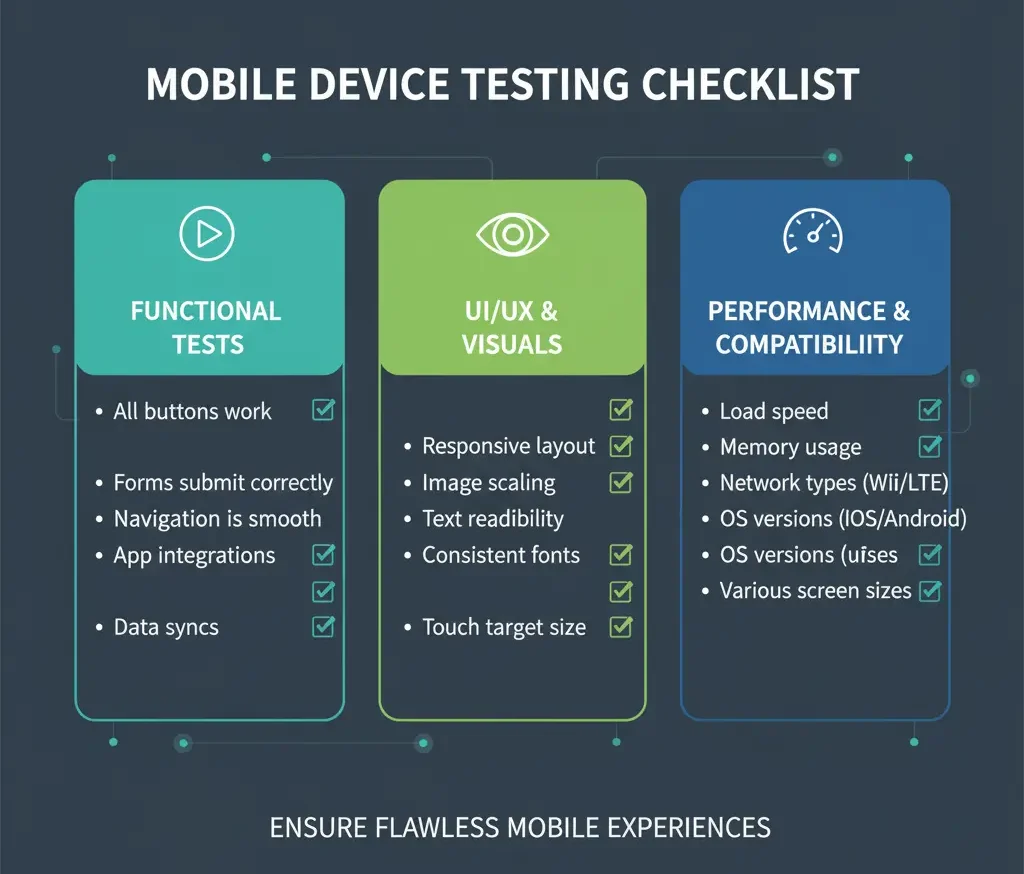
Before launching any mobile PPC campaign, thorough testing is essential to ensure optimal performance and user experience. Here’s a comprehensive checklist for UAE businesses:
- Test on actual devices: Use popular devices in the UAE, such as iPhone, Samsung Galaxy, and Huawei, to simulate real user conditions.
- Verify functionality on iOS Safari and Android Chrome: Ensure all features work seamlessly on both major mobile browsers.
- Check load times on 4G, 5G, and WiFi connections: Test page speed under different network conditions to guarantee fast loading for all users.
- Test in both portrait and landscape orientations: Confirm that the layout adapts smoothly and all elements remain accessible regardless of device orientation.
- Verify form functionality and autofill compatibility: Ensure forms are easy to complete and autofill works correctly on mobile devices.
- Confirm click-to-call and map integrations work properly: Test all interactive elements, including click-to-call buttons and embedded maps, to ensure they function as intended.
Related read:- Are Google Ads Worth It? 8 Tips to Run Effective, Cost‑Smart Campaigns That Drive Growth
Ongoing A/B Testing Strategy
Continuous optimization is key to maximizing mobile PPC performance. Focus on these elements for ongoing A/B testing:
- CTA button sizes, colors, and placement: Experiment with different designs to see what drives the highest conversion rates.
- Form length variations: Test shorter vs. longer forms to find the optimal balance between information collection and user convenience.
- Image vs. video hero sections: Compare the impact of static images versus video content on engagement and conversions.
- Page layout structures: Try different layouts to identify the most effective arrangement for mobile users.
- Headline and copy variations specifically for mobile: Tailor messaging to mobile users’ preferences and behaviors.
Analytics and Monitoring
Track these key metrics to measure and optimize mobile PPC campaign performance:
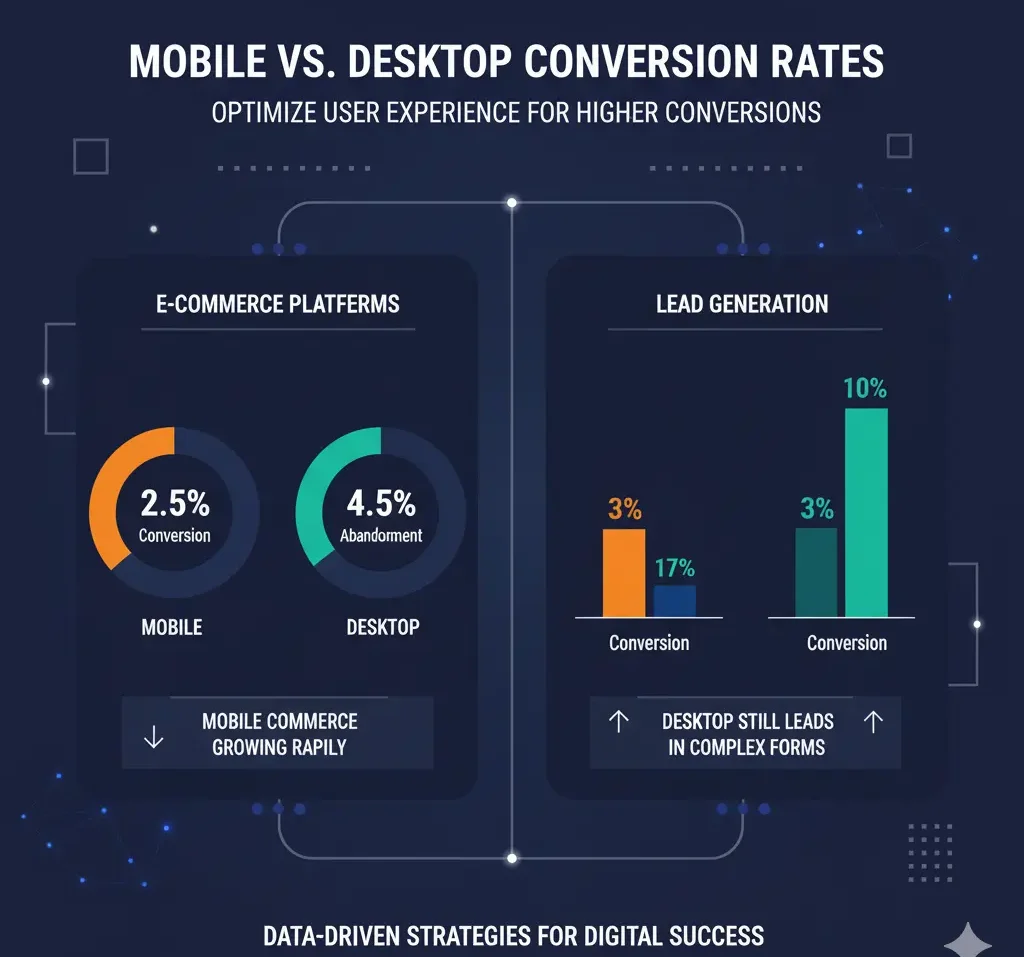
- Mobile vs. desktop conversion rates: Compare conversion rates across device types to identify trends and opportunities.
- Device-specific bounce rates: Monitor bounce rates for different devices to pinpoint issues and areas for improvement.
- Page load times by device type: Track load times to ensure fast performance across all devices.
- Mobile Quality Scores: Monitor Quality Scores for mobile campaigns to assess ad relevance and landing page quality.
- Cost per conversion mobile vs. desktop: Compare costs to optimize budget allocation and maximize ROI.
Tools to implement: Use Google Analytics 4 mobile reports, Google Ads device performance segmentation, and heatmap tools like Hotjar to gather detailed insights and drive continuous improvement.
Looking Ahead: Mobile PPC Trends for 2026
5G and 6G Expansion
The UAE continues to cement its position as a global telecommunications leader with ambitious plans for next-generation mobile infrastructure. With 99.5% coverage of populated areas, more than 23,000 5G sites serving over 10 million subscribers, and the recent launch of a national 6G Initiative in November 2025, the country is preparing for connectivity that will be up to 500 times faster than current 5G speeds. This infrastructure advancement will enable revolutionary mobile ad experiences that were previously impossible: augmented reality (AR) try-ons allowing customers to virtually test products before purchase, interactive 360° product views providing immersive shopping experiences, and instant high-definition video streaming without buffering. The integration of artificial intelligence, quantum computing, and satellite networks will create ultra-immersive experiences and autonomous systems that transform how UAE consumers interact with PPC advertising. By 2030, early commercial 6G deployment is expected in strategic zones such as industrial hubs and next-generation urban environments, with nationwide coverage planned from 2031 onward.
Progressive Web Apps (PWAs)
Progressive Web Apps are emerging as powerful landing page alternatives for PPC campaigns, offering app-like experiences without requiring downloads from app stores. For UAE e-commerce businesses and service providers, PWAs deliver fast loading, offline functionality, push notifications, and home screen installation—all while maintaining the accessibility of a website. This is particularly valuable in the UAE market where mobile users expect instant access without friction. PWAs bridge the gap between websites and native apps, providing seamless booking experiences for restaurants, real estate tours, retail shopping, and service appointments while reducing abandonment rates associated with app download requirements.
Voice Search Integration
With the growing adoption of voice assistants like Siri, Google Assistant, and Alexa on mobile devices, optimizing PPC campaigns for voice-activated searches is becoming essential. This trend is especially relevant in the UAE’s multilingual context, where users conduct voice searches in Arabic, English, and other languages. Voice search queries tend to be longer and more conversational than typed searches, requiring PPC advertisers to adjust keyword strategies and ad copy accordingly. Optimizing landing pages for natural language queries and featured snippets will become critical for capturing voice search traffic in 2026.
AI-Powered Personalization
Machine learning and artificial intelligence will enable unprecedented real-time landing page content customization based on device type, geographic location, and user behavior patterns specific to UAE consumers. AI-native networking, which is a cornerstone of the upcoming 6G infrastructure, will allow PPC campaigns to dynamically adjust headlines, images, offers, and CTAs based on individual user profiles and contextual signals. For example, a Dubai-based user searching for luxury real estate on their iPhone at 8 PM might see different content than an Abu Dhabi user browsing on Android during lunch hour. This hyper-personalization will dramatically improve conversion rates by delivering the most relevant experience to each visitor at the exact moment they engage with your ads.
Conclusion and Action Steps
In the UAE’s ultra-connected market with 99% internet penetration, 546.14 Mbps mobile speeds, and ambitious 6G infrastructure plans, mobile-first PPC isn’t a trend—it’s the foundation of successful digital advertising. Success requires three pillars working in harmony: responsive ads that adapt seamlessly across devices and screen sizes, lightning-fast landing pages that load under 2.5 seconds to meet user expectations, and continuous testing across devices to optimize every element of the user journey. The statistics are clear: every second of delay costs conversions, every non-responsive element loses customers, and every untested assumption wastes ad spend. As the UAE prepares for 6G connectivity that will revolutionize mobile experiences with AR, AI personalization, and instant interactivity, businesses that master mobile-first PPC today will dominate tomorrow’s hyper-connected marketplace.
Take action now:
- Audit your current mobile experience using Google PageSpeed Insights and identify optimization opportunities
- Implement responsive ad formats across all campaigns to maximize reach and engagement
- Prioritize page speed optimization, focusing on Core Web Vitals benchmarks
- Establish device-specific tracking in Google Analytics 4 to measure mobile performance
- Create an A/B testing schedule for continuous mobile optimization
The future of PPC in the UAE is mobile, fast, and personalized. Partner with a specialized PPC and Google Ads agency in Dubai that understands the UAE’s unique mobile landscape, or contact Prontosys today for a comprehensive mobile conversion audit that identifies exactly how much revenue you’re leaving on the table.

Vijit Tyagi is the CEO and Founder of ProntoSys, a global digital marketing and IT services agency headquartered in Dubai. A B.Tech graduate in Computer Science from Dr. A.P.J. Abdul Kalam Technical University, he brings over 15 years of industry experience. Under his leadership, ProntoSys has expanded across the UAE, UK, and India, becoming a certified Google Partner with a team of 120+ professionals. Tyagi focuses on client-centric digital solutions, ROI-driven strategies, and helping businesses adopt effective digital transformation. He also contributes thought-leadership articles on digital marketing in major publications, emphasizing innovation and growth for modern businesses.